The Power of “No”: Why Setting Boundaries is the Ultimate Form of Self-Care
We’ve all been there: saying “yes” to a late-night project when we’re exhausted, “yes” to an event we have no interest in attending, or “yes” to a favor that stretches our resources thin.
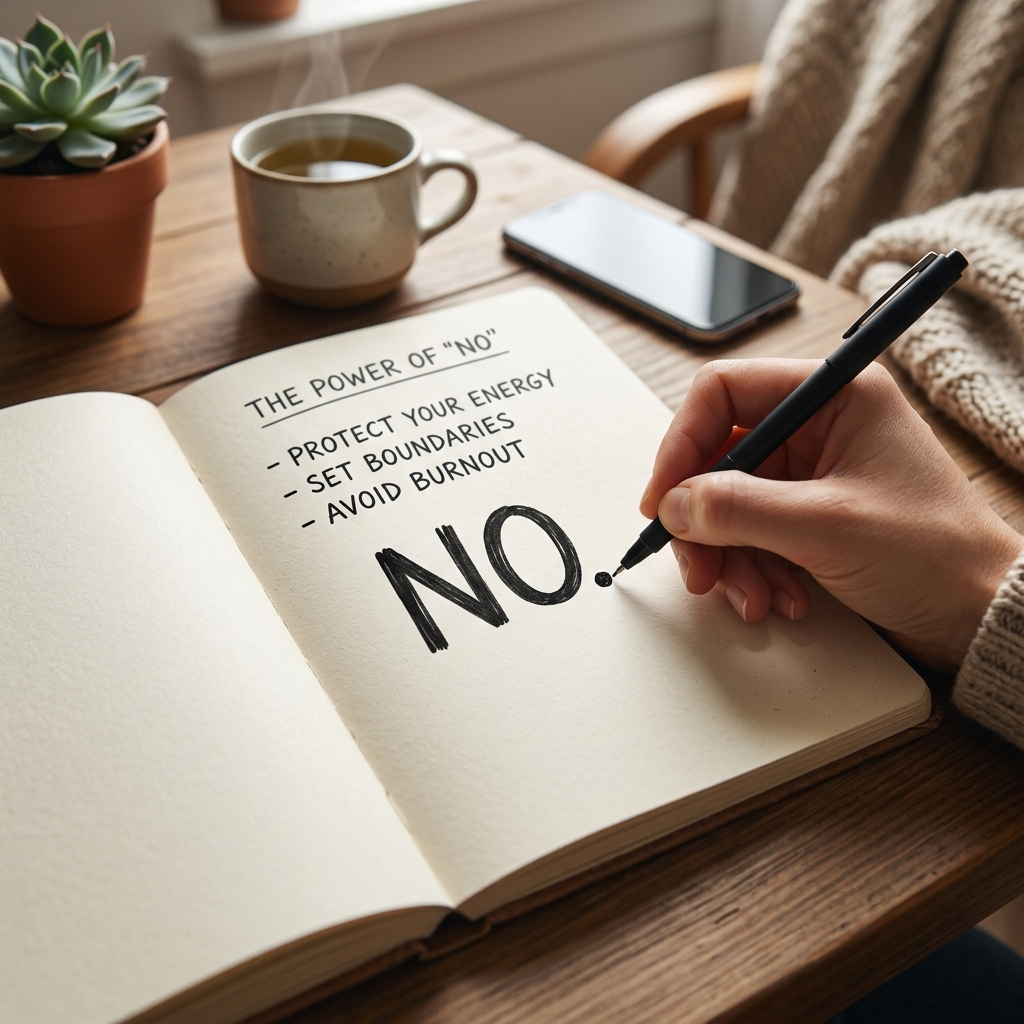
We often view the word “No” as a rejection or a sign of selfishness. In reality, “No” is one of the most powerful tools in your self-care arsenal. It isn’t about being difficult; it’s about protecting your peace and ensuring you have the energy to show up for the things that actually matter.
What are Boundaries, Really?
Think of boundaries as the invisible fences that protect your mental and emotional property. They define where you end, and others begin. Without them, we become susceptible to burnout, resentment, and a loss of identity.
The Three Types of Boundaries:
- Physical: Your personal space and physical touch.
- Emotional: Separating your feelings from others’ and protecting your mental energy.
- Time: Respecting your schedule and capacity.
Why “No” is the Ultimate Self-Care
Self-care is often marketed as bubble baths and face masks. While those are lovely, true self-care is often much more boring and much more difficult. It’s about making choices that sustain your long-term well-being.
- It Prevents Burnout: You cannot pour from an empty cup. Saying no allows you to rest and recharge.
- It Builds Mutual Respect: When you set clear limits, people understand how to treat you. It filters out those who are only in your life for what they can take.
- It Creates Space for “Yes”: Every time you say no to something that doesn’t serve you, you are saying yes to your health, your hobbies, or your family.
How to Say “No” Without the Guilt
The hardest part of setting boundaries is the initial “guilt spike.” We worry about let-downs or appearing unkind. Here is how to handle it like a pro:
“No” is a complete sentence. You don’t owe anyone an elaborate story or a list of excuses.
Try these scripts:
- The Soft No: “I’d love to help, but I’m at capacity right now.”
- The Raincheck: “I can’t do this today, but I can look at my schedule for next month.”
- The Boundary: “I’m not taking on any new commitments at the moment.”
The Takeaway
Setting boundaries isn’t about building a wall to keep people out; it’s about building a gate so you can control who and what enters your life. It is an act of radical self-respect.
Start small. Practice saying no to one minor request this week and notice how it feels to reclaim your time. You might find that the world doesn’t end. In fact, your life might finally start to feel like your own again.
Leave a Reply