
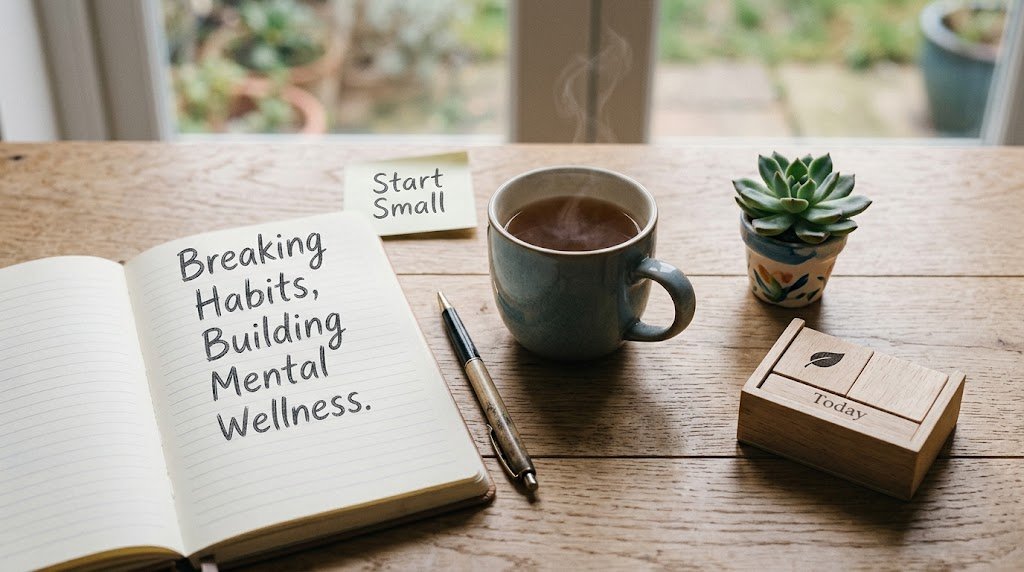
Breaking the Cycle: How Daily Micro-Habits Shape Your Mental Health
We often think of habits as massive lifestyle changes, like committing to a strict two-hour workout routine, overhauling our entire diet, or waking up at 4:30 AM every single day. But the habits that truly dictate our mental well-being aren’t the grand gestures; they are the micro-habits woven quietly into our daily routines.
Think about your average Tuesday. How many times do you reflexively reach for your phone the moment you wake up? How often do you dismiss your feelings with a quick “I’m fine,” or skip lunch because you’re “too busy”?
These small, seemingly harmless routines accumulate over time, acting like static electricity in our minds, building up tension, draining our emotional battery, and quietly fueling anxiety and burnout.
If you want to protect your mental health, the goal isn’t to completely reinvent your life overnight. It’s about recognizing and reshaping the subtle, daily loops that keep your mind trapped in stress. Here is how you can start breaking those unhealthy day-to-day habits and building a calmer, more resilient mind.
1. Spotting the Invisible Triggers
Every habit, good or bad, follows a psychological loop: Trigger → Routine → Reward.
Before you can break an unhealthy habit, you have to catch it in the act. Most daily stress habits are automatic responses to emotional triggers like boredom, anxiety, loneliness, or fatigue.
- The Doom-Scrolling Trap: You feel overwhelmed or bored at work, so your hand automatically picks up your phone to check social media. The temporary distraction feels like relief (the reward), but leaves your brain overstimulated and anxious.
- The Venting Loop: You start every morning conversation by complaining about how tired you are. It bonds you with others momentarily, but reinforces a negative narrative in your own brain.
How to shift it: Next time you catch yourself engaging in a stress-driven habit (like mindless snacking, negative self-talk, or endless scrolling), pause for five seconds and ask: What am I feeling right now? Pinpointing the emotion behind the action is the first step to neutralizing it.
2. Swap, Don’t Stop
One of the biggest reasons habit-breaking fails is the “cold turkey” illusion. Telling your brain, “I am never going to check my phone in bed again,” often sets off a panic response. Your brain craves the dopamine hit or comfort that the habit provided.
Instead of trying to eliminate a habit entirely, substitute it with a healthier alternative that fulfills the same emotional need.
- Unhealthy Habit: Reaching for your phone first thing in the morning to check emails or news, spiking your cortisol before your feet even touch the floor.
- The Swap: Leave your phone across the room. Keep a glass of water and a notebook on your nightstand. Drink the water and write down three things you want to focus on today instead.
- Unhealthy Habit: Slumping into the couch and binge-watching TV for three hours straight to numb work stress.
- The Swap: Take a 10-minute walk outside without your phone to decompress, allowing your nervous system to transition from work mode to rest mode.
3. Lower the Barrier for Self-Care
When our mental health dips, even the simplest wellness practices, like journaling, meditating, or cooking a nourishing meal, can feel like climbing Mount Everest. We set the bar too high, fail to maintain it, and then beat ourselves up for “lacking discipline.”
Combat this by embracing micro-steps.
- If a 20-minute meditation feels impossible, commit to two deep breaths when your computer boots up.
- If journaling three pages feels overwhelming, write down one sentence about how you feel before closing your eyes at night.
Consistency always beats intensity when it comes to mental health. Small, repeatable actions signal safety to your nervous system.
4. Cultivate “Mental Whitespace”
Our daily routines are often so packed with notifications, background noise, and endless to-do lists that our brains never get a moment to truly rest. This constant cognitive load keeps our sympathetic nervous system (fight-or-flight) running on overdrive.
Break the cycle by intentionally scheduling mental whitespace into your day:
- The 5-Minute Pause: Sit quietly without music, podcasts, or screens while drinking your morning coffee or tea.
- Transition Buffers: Instead of jumping straight from a stressful work meeting into interacting with your family or scrolling social media, take two minutes to stretch and reset.
Giving your brain permission to do nothing allows it to process emotional residue and prevents burnout from compounding over the week.
Final Thoughts: Grace Over Guilt
Breaking daily habits isn’t a linear journey. There will be days when you fall right back into old patterns—and that is completely normal.
The most important habit you can build for your mental health is self-compassion. When you slip up, don’t spiral into self-criticism. Simply acknowledge it, forgive yourself, and reset. Your mental health isn’t defined by a single bad day or a stubborn routine, but by your willingness to gently guide yourself back home to balance, one micro-habit at a time.
What is one daily habit you’d love to shift this week? Let’s talk about it in the comments below!
Leave a Reply