
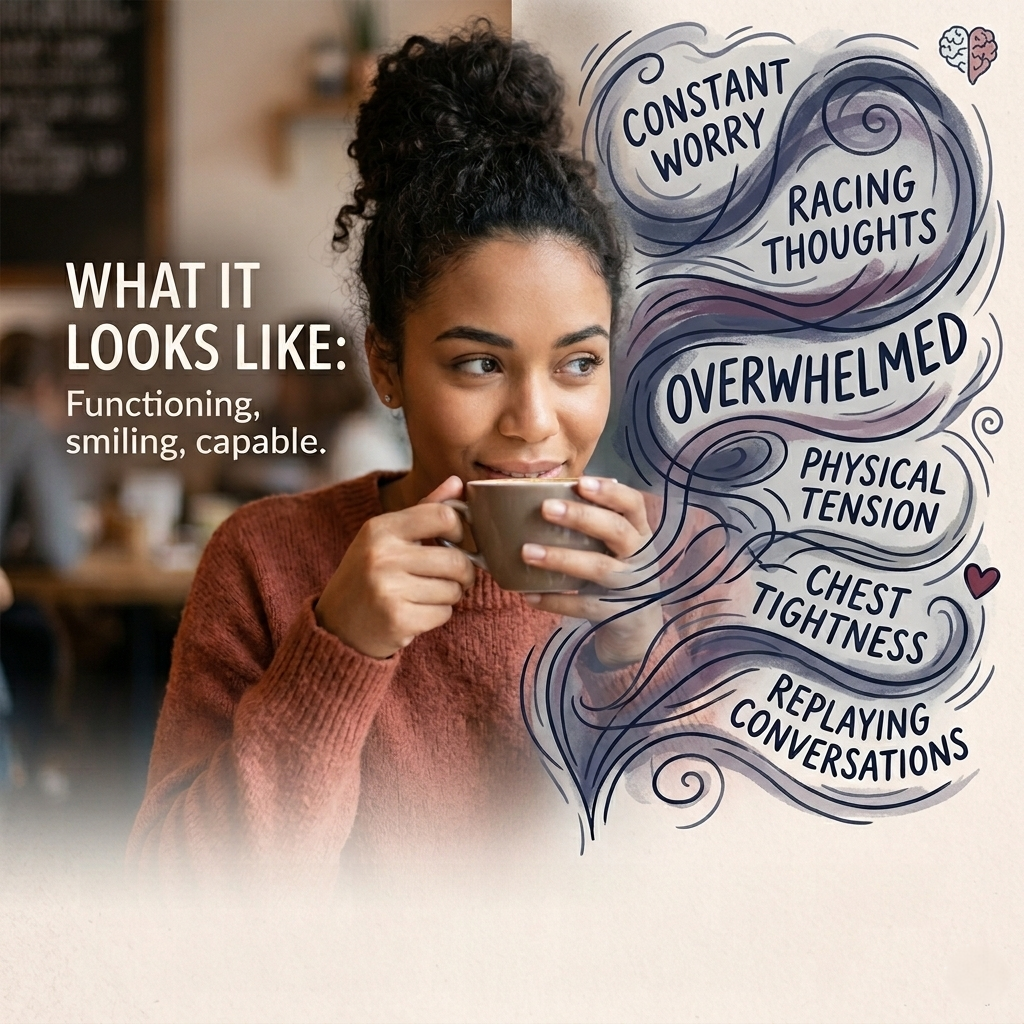
What I Wish People Knew About Anxiety
Anxiety is one of the most misunderstood mental health experiences. Many people think it’s just “worrying too much” or something you can simply turn off with positive thinking. But for those who live with anxiety, it’s far more complex, physical, and persistent.
If there’s one thing I wish more people understood, it’s this: anxiety is not a choice, and it’s not a character flaw.
Let’s talk about what people often get wrong.
Anxiety Isn’t Just in the Mind. It’s in the Body
When people hear the word anxiety, they often picture racing thoughts. But anxiety frequently shows up physically:
- Rapid heartbeat
- Chest tightness
- Shortness of breath
- Nausea or stomach issues
- Muscle tension
- Trouble sleeping
For many, the body reacts before the mind even understands what’s happening. It can feel like your nervous system is stuck on high alert, even when nothing dangerous is present.
What I wish people knew: We’re not being dramatic. Our bodies are genuinely reacting.
“Just Calm Down” Isn’t Helpful
If you’ve never experienced anxiety, it might seem logical to say, “Try to relax” or “Don’t overthink it.” While well-intentioned, these phrases can feel dismissive.
Anxiety isn’t simply excessive worry you can switch off. It involves the brain’s threat detection system misfiring and staying activated longer than it should.
What helps more:
- “I’m here with you.”
- “Do you want to talk about what’s coming up?”
- “How can I support you right now?”
Supportive presence often works better than quick fixes.
High-Functioning Anxiety Is Still Anxiety
Many people with anxiety appear completely fine on the outside. They go to work, meet deadlines, care for families, and show up for others.
Internally, though, they may be dealing with:
- Constant overthinking
- Fear of making mistakes
- Difficulty relaxing
- Mental exhaustion
- People-pleasing tendencies
Because they’re “functioning,” their struggle is often overlooked.
What I wish people knew: Just because someone looks okay doesn’t mean they feel okay.
Avoidance Isn’t Laziness. It’s Protection
When someone avoids certain places, tasks, or situations, it can be easy to label it as procrastination or lack of effort. But avoidance is often anxiety trying to protect the person from perceived threat or overwhelm.
The nervous system is essentially saying: This doesn’t feel safe.
Over time, avoidance can shrink someone’s world, but it usually starts as an attempt to cope.
Anxiety Can Be Managed with the Right Support
Here’s the hopeful part: anxiety is highly treatable. Many people experience significant relief with the right combination of support, which may include:
- Cognitive Behavioral Therapy (CBT)
- Mindfulness and grounding skills
- Lifestyle adjustments (sleep, caffeine, stress load)
- Medication when appropriate
- Nervous system regulation practices
Healing doesn’t mean anxiety disappears forever, but it can become much more manageable.
What Truly Helps Someone With Anxiety
If someone in your life struggles with anxiety, small things matter more than you might think:
- Be patient
- Listen without immediately fixing
- Avoid minimizing their experience
- Offer steady, calm presence
- Encourage professional support when needed
Compassion reduces shame, and shame often fuels anxiety.
Final Thoughts
Anxiety is invisible, exhausting, and often misunderstood. But with awareness, support, and proper care, people with anxiety can and do lead full, meaningful lives.
If you live with anxiety, please know this:
You are not weak.
You are not broken.
And you are definitely not alone.
Leave a Reply