
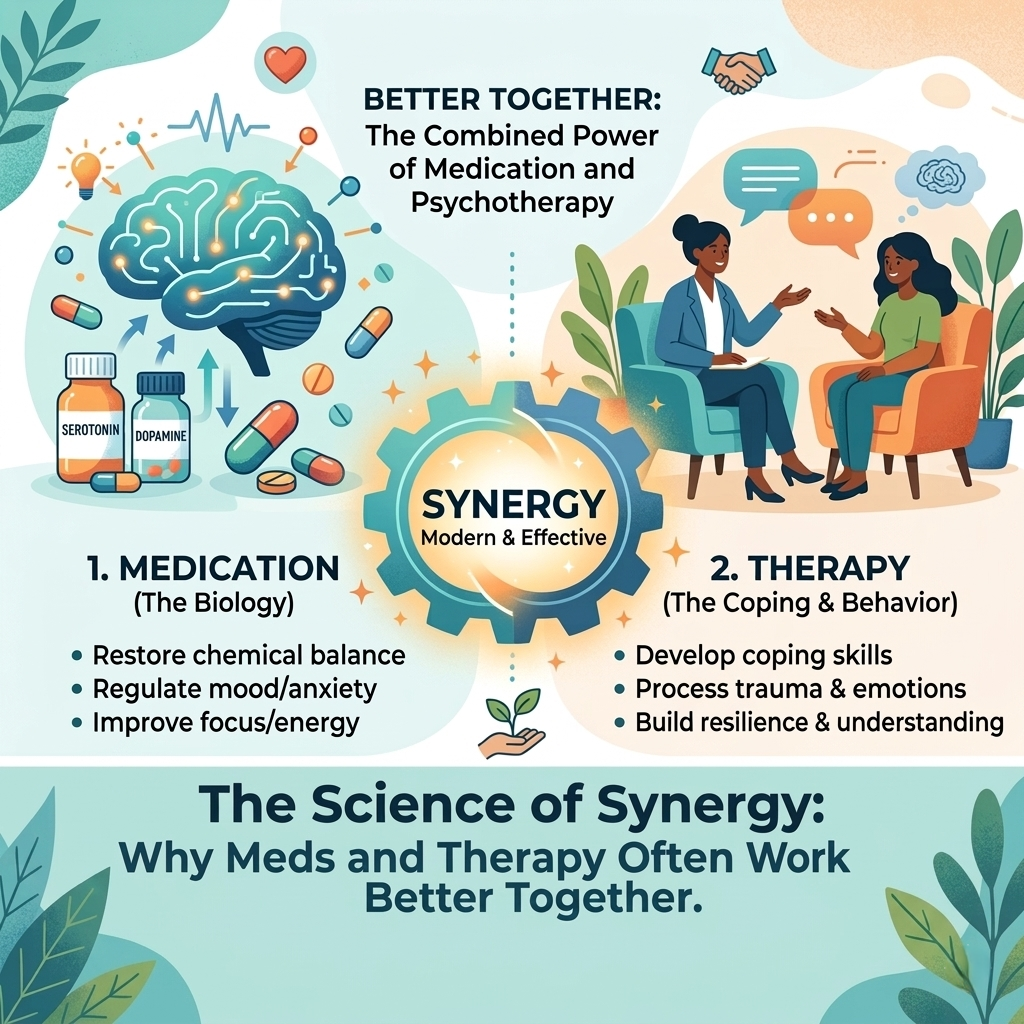
The Science of Synergy: Why Meds and Therapy Often Work Better Together
When it comes to treating mental health conditions like depression, anxiety, or ADHD, the conversation often feels like a fork in the road. Some people swear by “the couch” (talk therapy), while others rely on “the chemist” (medication).
But what if the most effective path isn’t choosing one or the other, but utilizing both?
In the world of psychology, we call this combined treatment, and the science behind why it works is fascinating. It’s not just about doubling up on help; it’s about creating a biological and behavioral synergy that can accelerate healing.
The Biological Side: Stabilization via Medication
Think of your brain as a high-tech communication network. For this network to function, it relies on chemical messengers called neurotransmitters, things like serotonin, dopamine, and norepinephrine.
When a mental health condition is present, this “chemistry” can get out of balance. This isn’t a “flaw” in character; it’s a physiological reality. Medication works to:
- Regulate levels: Rebalancing these chemicals to reduce physical symptoms like panic, lethargy, or brain fog.
- Create a “Floor”: This is the most vital part. Medication provides a baseline of stability. It raises the “floor” of your mood so that you aren’t constantly falling into a basement of despair or exhaustion.
The Behavioral Side: Growth via Therapy
If medication addresses the biology, therapy addresses the biography. While a pill can help dampen a panic attack, it cannot teach you how to navigate a difficult conversation with your boss or challenge a lifelong belief that you aren’t “good enough.”
Therapy focuses on:
- Coping Mechanisms: Learning how to manage stress in real-time.
- Rewiring Thought Patterns: Identifying the cognitive distortions that keep you stuck.
- Emotional Processing: Dealing with trauma or grief that chemical intervention alone cannot reach.
Why They Work Better Together: The “Energy” Factor
The biggest hurdle in mental health recovery is often the energy gap.
It’s incredibly hard to practice Cognitive Behavioral Therapy (CBT) exercises when you are so depressed you can’t get out of bed. It is nearly impossible to “breathe through” anxiety when your nervous system is stuck in a permanent state of “fight or flight.”
This is where the synergy happens:
Medication provides the stability and focus you need to actually do the hard work of therapy.
When medication quietens the “background noise” of your symptoms, you finally have the mental bandwidth to engage with your therapist, learn new skills, and apply them in your daily life. One builds the foundation (the meds), while the other builds the house (the therapy).
Finding Your Balance
Everyone’s brain chemistry and life experience are unique. For some, therapy alone is the answer; for others, medication is a lifelong necessity. However, for many, the combination of both offers the most sustainable path to long-term wellness.
If you’ve been struggling to make progress in therapy, it might be worth discussing a chemical “boost” with a psychiatrist. Conversely, if you’re taking meds but still feel “stuck” in old patterns, a therapist can help you use your newfound stability to make lasting changes.
The goal isn’t just to feel “not bad”. It’s to build a life where you can thrive.
Leave a Reply