
Long-Term Trauma Recovery: Understanding the Symptoms and Solutions
Healing from a traumatic event isn’t a race; for many, it’s a marathon where the finish line keeps moving. While society often expects us to “get over it” after a few months, the reality of long-term trauma is that it can reshape your nervous system for years.
If you’ve been feeling “stuck” long after the initial event, you aren’t failing at recovery. You’re simply navigating a complex physiological and emotional landscape. Here is a breakdown of how long-term trauma manifests and how you can begin to reclaim your narrative.
The Lingering Echo: Recognizing Long-Term Symptoms
Long-term trauma, often referred to as Complex PTSD (C-PTSD) or post-traumatic stress, doesn’t always look like a flashback in a movie. It often shows up in more subtle, corrosive ways:
Emotional Dysregulation: Sudden bursts of anger, prolonged periods of numbness, or overwhelming sadness that feels disconnected from your current day.
Hypervigilance: A constant, exhausting “scanning” of your environment for threats, even when you are objectively safe.
The “Body Memory”: Physical symptoms like chronic tension, unexplained aches, or digestive issues. As the saying goes, the body keeps the score.
Altered Self-Perception: Deep-seated feelings of shame, guilt, or the belief that you are permanently “damaged” compared to others.
Path to Peace: Evidence-Based Solutions
The good news? The brain is neuroplastic. It can be rewired. Recovery is less about “fixing” what happened and more about building a life where the trauma no longer holds the steering wheel.
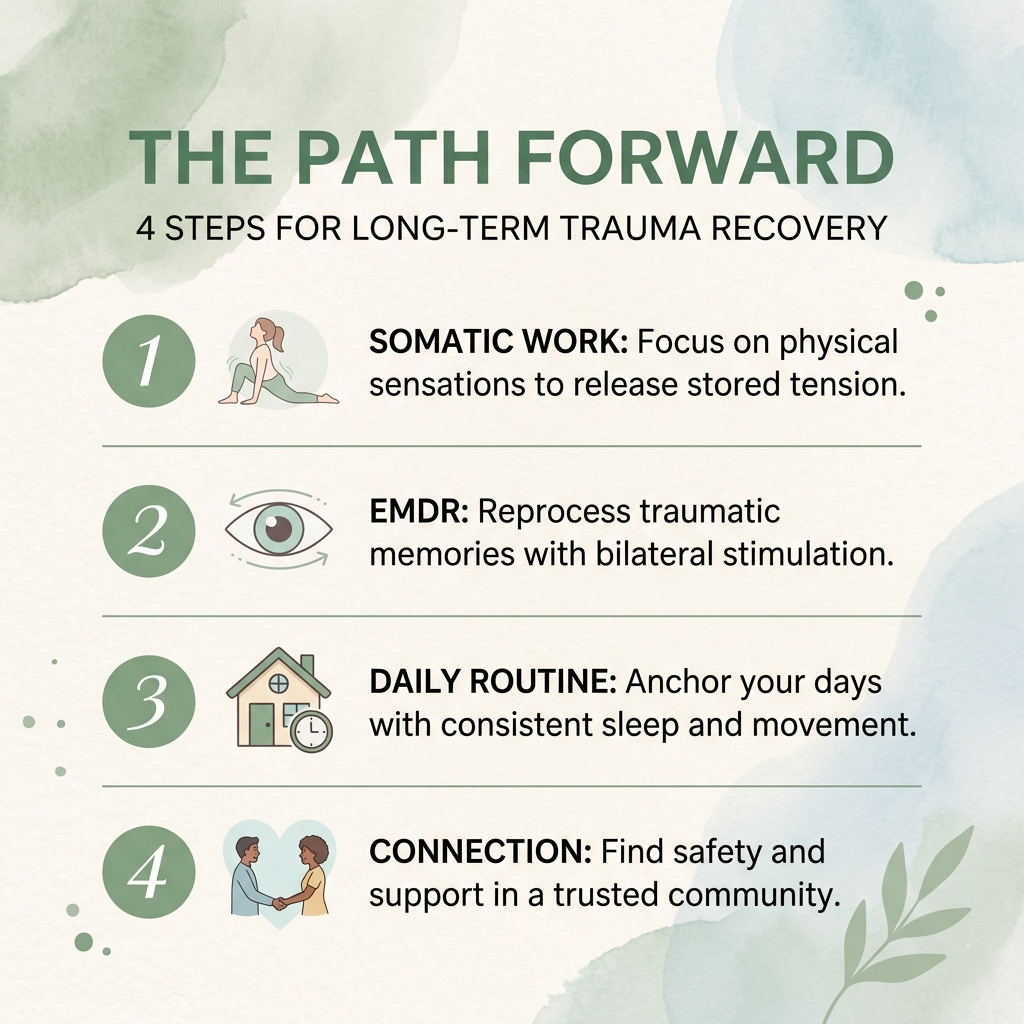
- Somatic Experiencing (Bottom-Up Healing)
Since trauma is stored in the nervous system, traditional talk therapy (top-down) isn’t always enough. Somatic practices help you release stored tension by focusing on physical sensations rather than just the story of the event. - EMDR (Eye Movement Desensitization and Reprocessing)
EMDR is a powerhouse for long-term recovery. It uses bilateral stimulation (like eye movements) to help the brain reprocess traumatic memories so they become less emotionally charged. - Establishing a “Safety Anchor”
Recovery cannot happen while the body feels it is still in the “war zone.” This involves creating a daily routine that prioritizes sleep, movement, and a physical space that feels entirely yours. - Community and Connection
Trauma thrives in isolation. Whether it’s a support group or a trusted circle of friends, being “seen” and validated by others helps dismantle the shame that trauma creates.
A Note on Patience: Recovery is non-linear. You will have “green” days where you feel light, and “gray” days where the weight returns. Neither is a sign of your progress; they are just parts of the process.
Final Thoughts
Understanding that your symptoms are normal reactions to abnormal events is the first step toward freedom. You aren’t broken; you are a survivor whose system is doing its best to keep you safe. With the right tools and a dose of self-compassion, long-term healing is more than possible; it’s inevitable.
Leave a Reply