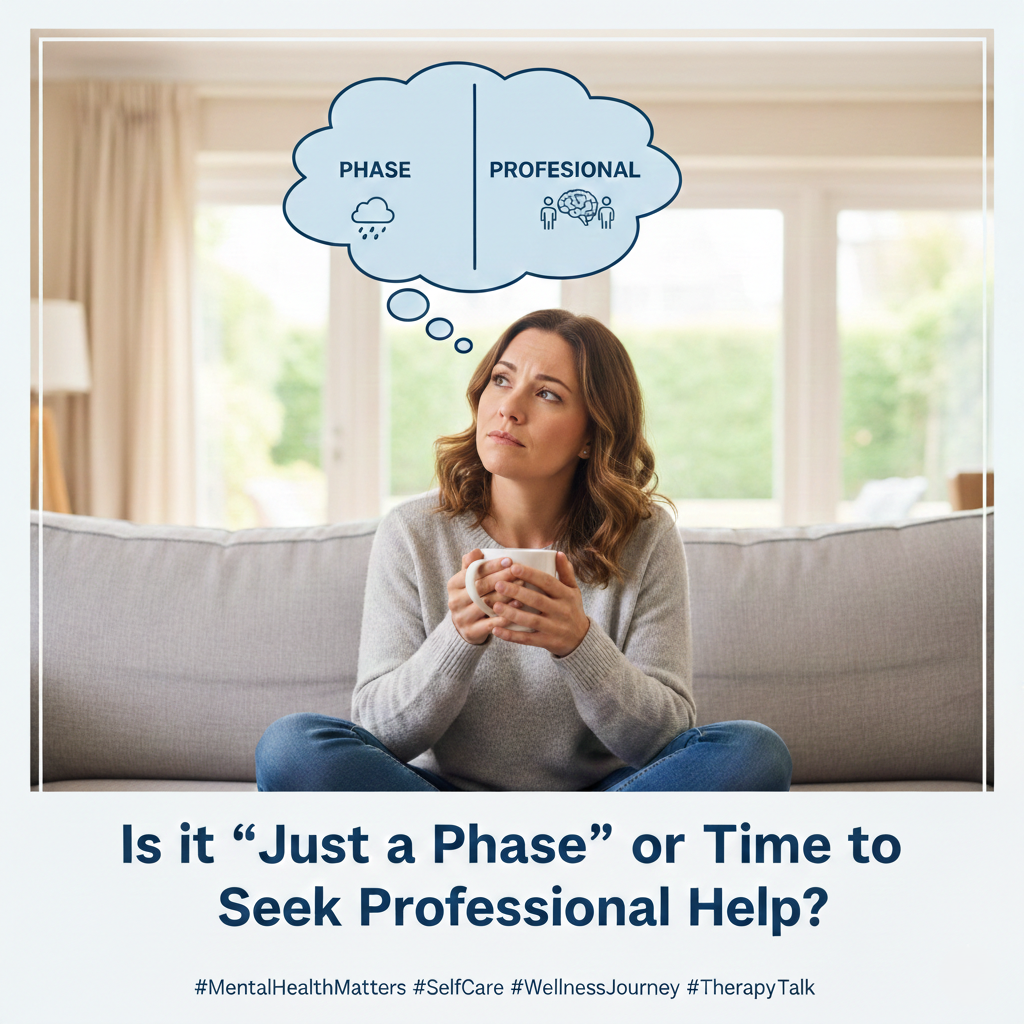
Is it “Just a Phase” or Time to Seek Professional Help?
We all have moments when life feels overwhelming, confusing, or just plain difficult. It’s a normal part of the human experience to have “off” days, weeks, or even periods where our energy sags and our mood dips. But how do we discern between a temporary slump that will pass on its own and a deeper struggle that might require professional guidance? This question is crucial, as recognizing the signs early can make a significant difference in our mental well-being journey.
It’s easy to dismiss persistent negative feelings as “just a phase” or something we should “snap out of.” The truth is, while many challenges do resolve with time and self-care, others can linger and intensify, impacting every facet of our lives. Understanding the difference isn’t about pathologizing normal emotions, but rather about empowering ourselves to seek the right support when needed.
When Your Usual Coping Strategies Aren’t Enough
Think about your go-to strategies when you’re feeling low. Do you exercise, talk to a friend, dive into a hobby, or spend time in nature? These are fantastic self-care tools. However, if you find that these once-effective methods no longer bring relief, or if you’re constantly relying on less healthy coping mechanisms (like excessive drinking, overeating, or isolating yourself), it might be a sign that something more is at play.
Four Key Indicators It Might Be Time to Reach Out:
While everyone’s experience is unique, here are some common signs that suggest it might be beneficial to talk to a mental health professional:
- Significant Changes in Your Daily Functioning:
- Are tasks that used to be manageable now feeling incredibly difficult or impossible? This could include getting out of bed, going to work/school, maintaining personal hygiene, or completing household chores.
- Are you struggling to concentrate or make decisions, even simple ones?
- Persistent and Intense Emotional Distress:
- Are feelings of sadness, anxiety, hopelessness, or irritability lasting for weeks or months, rather than days?
- Do these emotions feel overwhelming, making it hard to find joy or peace?
- Are you experiencing intense mood swings that are hard to control?
- Changes in Sleep Patterns or Appetite:
- Are you sleeping significantly more or less than usual, or struggling with insomnia?
- Have you noticed a considerable change in your appetite, leading to significant weight loss or gain? These physical symptoms are often closely linked to our mental state.
- Withdrawal from Activities and Relationships You Once Enjoyed:
- Have you lost interest in hobbies, social events, or activities that once brought you pleasure (this is often called anhedonia)?
- Are you isolating yourself from friends, family, or social situations more than usual?
Taking the Brave Step
It’s important to remember that seeking professional help is not a sign of weakness; it’s a testament to your strength and your commitment to your well-being. Just as you’d see a doctor for a persistent physical ailment, a therapist or counselor can provide tools, strategies, and a safe space to navigate complex emotional challenges.
Mental health professionals are trained to help you understand your feelings, identify underlying issues, and develop healthy coping mechanisms. They can offer an objective perspective and guide you toward a path of healing and growth.
What Kind of Help is Available?
There are various types of mental health professionals and approaches, including:
- Psychiatrists: Medical doctors who can diagnose mental health conditions and prescribe medication if necessary.
- Therapists/Counselors: Offer talk therapy to help process emotions, thoughts, and behaviors.
Don’t wait for a crisis to occur. If you’re consistently experiencing any of the signs mentioned above, or if you simply feel like you’re not yourself and could use some support, consider reaching out. A brief consultation can help you determine the best course of action.
Your mental health is just as important as your physical health. Take that brave step towards understanding yourself better and living a fuller, more balanced life.
Leave a Reply