
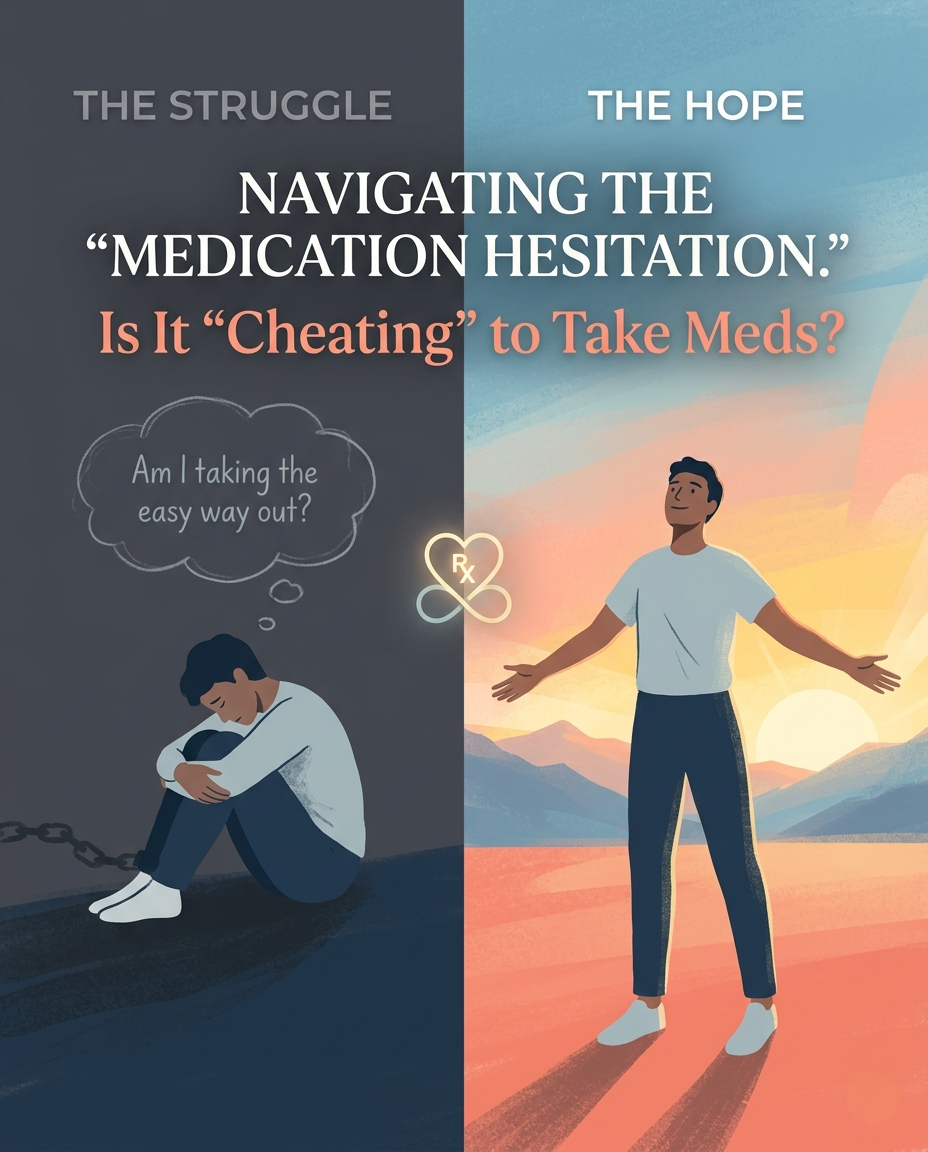
Is It “Cheating” to Take Meds? Overcoming the Stigma of Psychiatric Medication
For many people, the moment a doctor hands over a prescription for an antidepressant or an anti-anxiety medication, a wave of relief is immediately followed by a sharp, stinging thought:
“Am I taking the easy way out?”
This is the core of “Medication Hesitation.” We live in a culture that fetishizes “gritting it out” and “natural” healing. Somewhere along the line, we started treating mental health like a moral test rather than a medical reality.
If you’ve felt like taking psychiatric medication is “cheating” at life, let’s unpack why that stigma exists, and why it’s fundamentally wrong.
The “Moral Strength” Myth
We don’t tell someone with nearsightedness that they are “cheating” by wearing glasses. We don’t tell a person with Type 1 diabetes that they lack the “willpower” to produce their own insulin.
However, when it comes to the brain, the most complex organ in the body, we suddenly expect it to fix itself through sheer force of personality. The stigma usually stems from three big misconceptions:
- The “Artificial Self” Fear: The worry that meds will change who you are.
- The “Crutch” Comparison: The idea that you’re becoming dependent on a chemical instead of “doing the work.”
- The “Numbing” Narrative: The belief that meds just mask problems rather than solving them.
Why It’s Not “Cheating”
Let’s get one thing straight: Medication doesn’t do the work for you; it makes the work possible.
Imagine trying to climb a mountain while wearing a 100-pound backpack. You’re exhausted, your knees are buckling, and you’re barely moving. Psychiatric medication isn’t a helicopter that flies you to the summit; it’s the hand that helps you take off the backpack so you can actually start climbing.
Key Perspective: Medication provides the baseline stability needed for therapy, lifestyle changes, and self-reflection to actually take root. It’s hard to “journal your way out of a crisis” when your brain’s chemistry is stuck in a loop of fight-or-flight.
Changing the Dialogue
If you are struggling with medication hesitation, try reframing the conversation:
- It’s a Tool, Not a Cure-All: Just like a hammer helps build a house but doesn’t build it for you, medication is one tool in a larger mental health toolkit.
- Bio-Individual Needs: Everyone’s neurochemistry is different. Seeking a balance that allows you to function isn’t a failure; it’s proactive health management.
- The “Real You” is Still There: Most people find that the right medication actually helps them feel more like themselves because they aren’t buried under the weight of their symptoms.
Moving Forward
Choosing to take medication is a deeply personal decision made between you and a professional. It’s not an admission of defeat; it’s an act of courage. It’s saying, “I value my quality of life enough to use every resource available to me.”
If you’re feeling the weight of the “cheating” stigma, remember: There are no extra points in life for suffering more than you have to.
Leave a Reply