
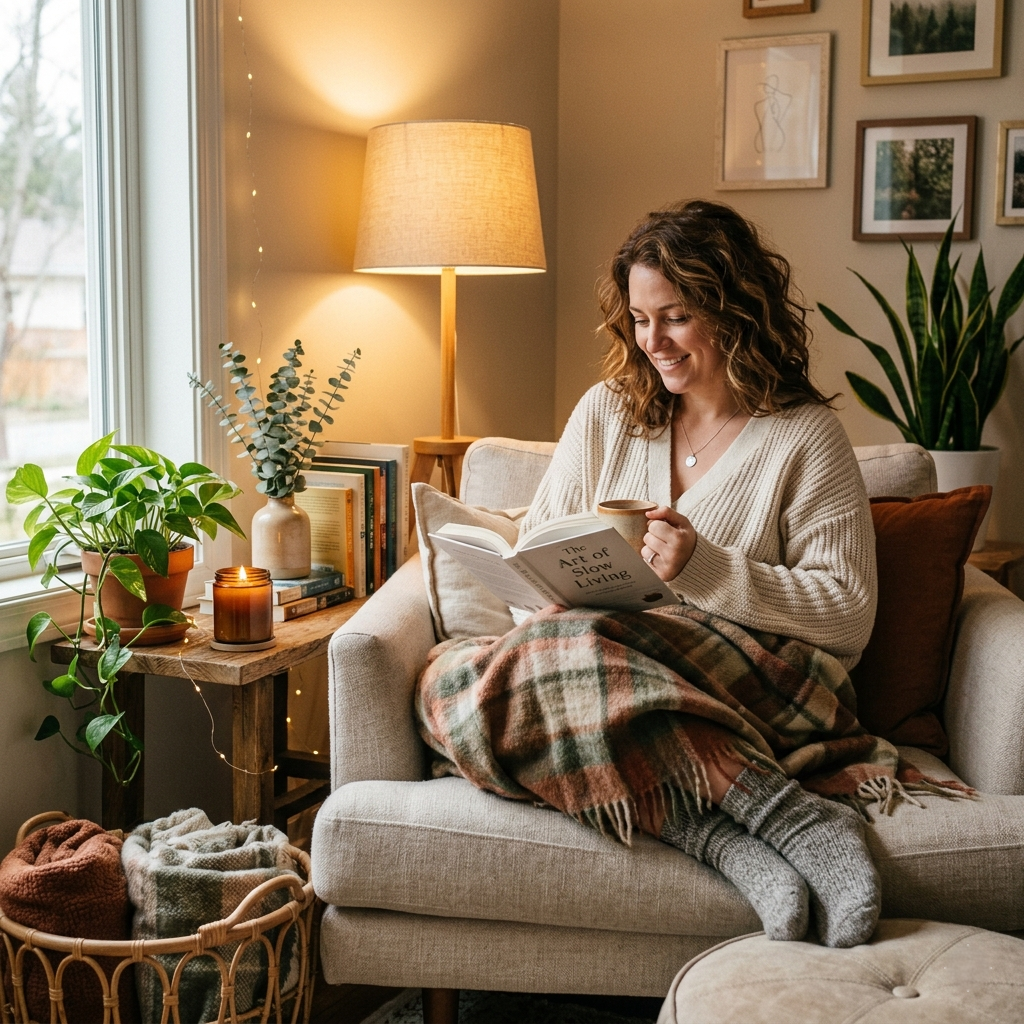
Creating a “Sanctuary” at Home: Low-Cost, High-Impact Ways to Make Your Space Feel Like a Physical Exhale
We’ve all had that moment: you walk through your front door after a long day, drop your keys, and instead of feeling relief, you feel… clutter. Between the pile of mail on the counter and the harsh overhead lighting, our homes can sometimes feel like just another item on the to-do list rather than a place to recover.
Transforming your home into a sanctuary doesn’t require a massive renovation or a designer budget. It’s about sensory shifts, small, intentional changes that signal to your nervous system: “You are safe. You can rest now.”
Here are five low-cost, high-impact ways to make your living space feel like a physical exhale.
1. Master the “Soft Lighting” Transition
Nothing kills a mood faster than “The Big Light.” Harsh overhead LEDs trigger alertness, which is the opposite of sanctuary vibes.
- The Fix: Switch to lamps, string lights, or candles once the sun goes down.
- The Pro Move: Swap your standard bulbs for “warm white” versions (look for 2700K on the box). It mimics the golden hour and immediately softens the room’s edges.
2. Clear the “Visual Noise”
Clutter isn’t just a mess; it’s a constant pull on your attention. You don’t need to be a minimalist, but you do need “clear zones.”
- The Fix: Identify one surface, a coffee table or a nightstand, and keep it 100% clear of “life admin” (bills, keys, random tech).
- The Impact: Having one spot where your eyes can rest without landing on a “task” allows your brain to switch out of work mode.
3. Engage the Olfactory System
Your sense of smell is the fastest way to bypass the thinking brain and hit the “relax” button.
- The Fix: You don’t need an expensive diffuser. Simmer a pot of water with cinnamon sticks and orange peels, or use a simple eucalyptus spray on your linens.
- The Vibe: Find a “sanctuary scent” that you only use when you are winding down. Eventually, your brain will associate that smell with permission to relax.
4. Bring the Outside In (On a Budget)
Biophilia, our innate connection to nature, is a proven stress reducer.
- The Fix: If you don’t have a green thumb, skip the finicky fiddle-leaf figs. Grab a $5 bundle of eucalyptus from the grocery store and put it in a vase, or propagate a pothos plant from a friend’s clipping.
- The Impact: Living things add movement and “breath” to a room that feels stagnant.
5. Prioritize “Tactile Comfort”
A sanctuary should feel good against your skin. This is where you invest your “high-impact” effort.
- The Fix: Texture overhauls. A chunky knit throw or a velvet pillow cover (often under $15 online) can make a stiff sofa feel like a hug.
- The Goal: If you can’t wait to change into your sweatpants the second you get home, your furniture should feel just as welcoming as those clothes.
The Takeaway: A home sanctuary isn’t about how it looks on Instagram; it’s about how it makes you feel when you close your eyes. Start with one room, one corner, or even just one candle.
Leave a Reply