
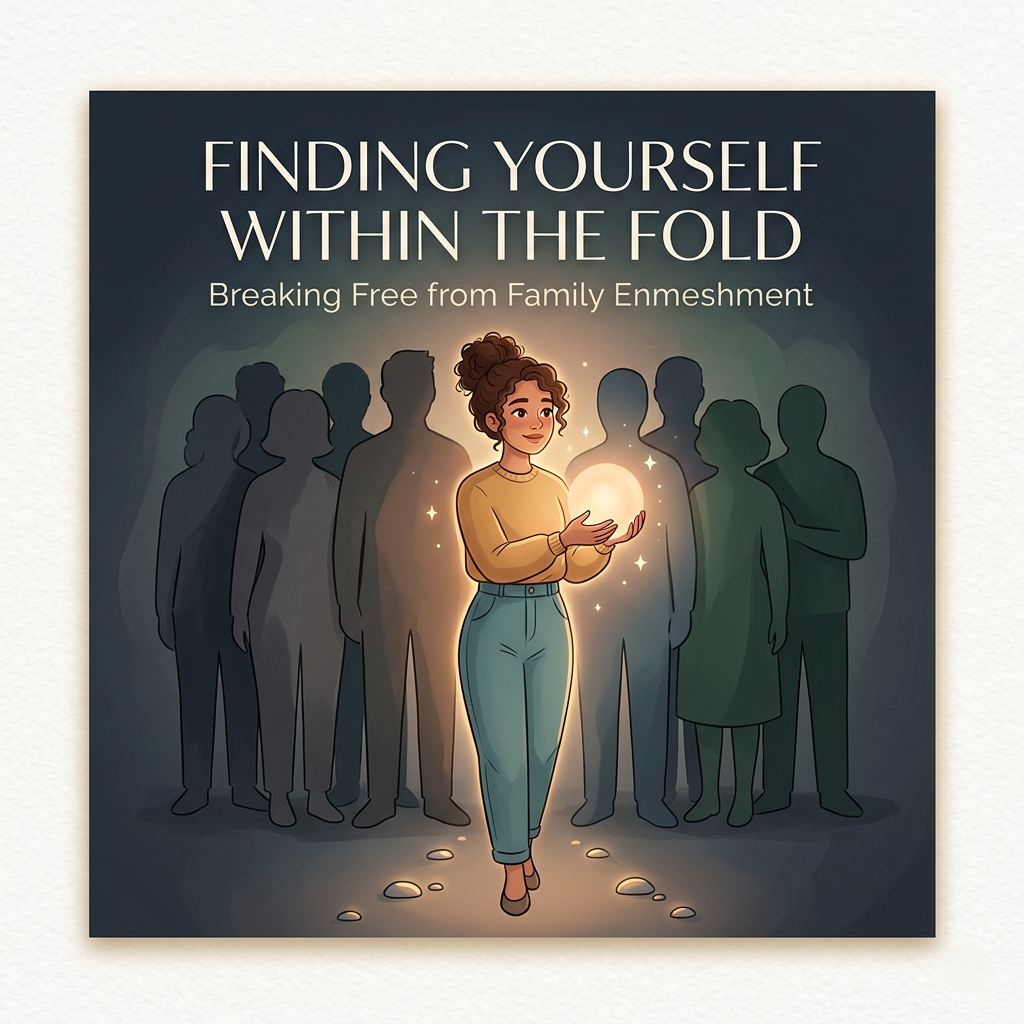
Breaking Free from Family Enmeshment: Finding Yourself Within the Fold
We often hear that a “close-knit family” is the gold standard of upbringing. But there is a thin, often invisible line between healthy closeness and enmeshment.
When that line is crossed, the “we” becomes so loud that the “I” completely disappears. If you’ve ever felt like your parents’ emotions are actually your own, or felt a wave of guilt for making a decision that didn’t involve a family vote, you might be experiencing enmeshment.
The good news? Breaking free isn’t about breaking ties. It’s about finding your own shape within the fold.
What is Family Enmeshment?
Enmeshment occurs when personal boundaries are blurred or non-existent. In these dynamics, family members are expected to think, feel, and act in unison.
The Red Flag: If one person is angry, everyone is angry. If one person is successful, it’s a family “win” that everyone claims. While it feels like support, it’s actually a form of control that stifles individual growth.
Signs You Might Be Enmeshed:
- The Guilt Tax: You feel responsible for your parents’ or siblings’ emotional well-being.
- The Consensus Trap: You struggle to make even minor life choices without seeking family approval.
- Privacy Paranoia: Having a secret or a private life feels like a “betrayal” to the family unit.
- Emotional Contagion: Your mood is entirely dependent on the “vibe” of the household.
The Empowering Angle: How to Reclaim Your Identity
Breaking free doesn’t mean you stop loving your family; it means you start loving yourself enough to exist independently. Here is how to begin the journey:
1. Define Your “Emotional Property Line”
Imagine a fence around your emotions. You are responsible for what happens inside your yard; your family is responsible for theirs. If your mother is upset about your career choice, that is her “emotional luggage” to carry; you don’t have to help her unpack it.
2. Start with “Micro-Boundaries”
You don’t need to give a manifesto on independence tomorrow. Start small:
- Wait an hour before returning a non-urgent family text.
- Make one small decision (like what to eat or wear) without asking for an opinion.
- Practice saying, “I understand you feel that way, but I’ve decided to do this.”
3. Rediscover Your “Original Self”
When you’ve spent years being a mirror for your family’s expectations, you might forget what you actually like. Spend time alone. Explore hobbies, music, or political views that haven’t been “vetted” by the family circle.
4. Weather the “Extinction Burst”
When you start setting boundaries, the family system will likely push back. They might use guilt, anger, or the “silent treatment” to pull you back into the old roles. Stay firm. This resistance is actually a sign that your boundaries are working.
Finding the Balance
The goal of unmeshing is differentiation. This is the ability to be connected to your family while remaining a unique individual. You can share Sunday dinner without sharing your entire psyche.
By finding yourself, you actually bring a healthier, more authentic version of “you” to the table. You aren’t just a part of the fold anymore; you are the designer of your own life.
Leave a Reply