
The Hidden Danger of Untreated Trauma (And Why “Just Moving On” Doesn’t Work)
We live in a culture that loves the idea of resilience. We are told to “shake it off,” “stay strong,” and “keep moving forward.” When something deeply distressing or traumatic happens, our first instinct is often to lock it in a mental box, bury it deep, and hope that time will heal the wound.
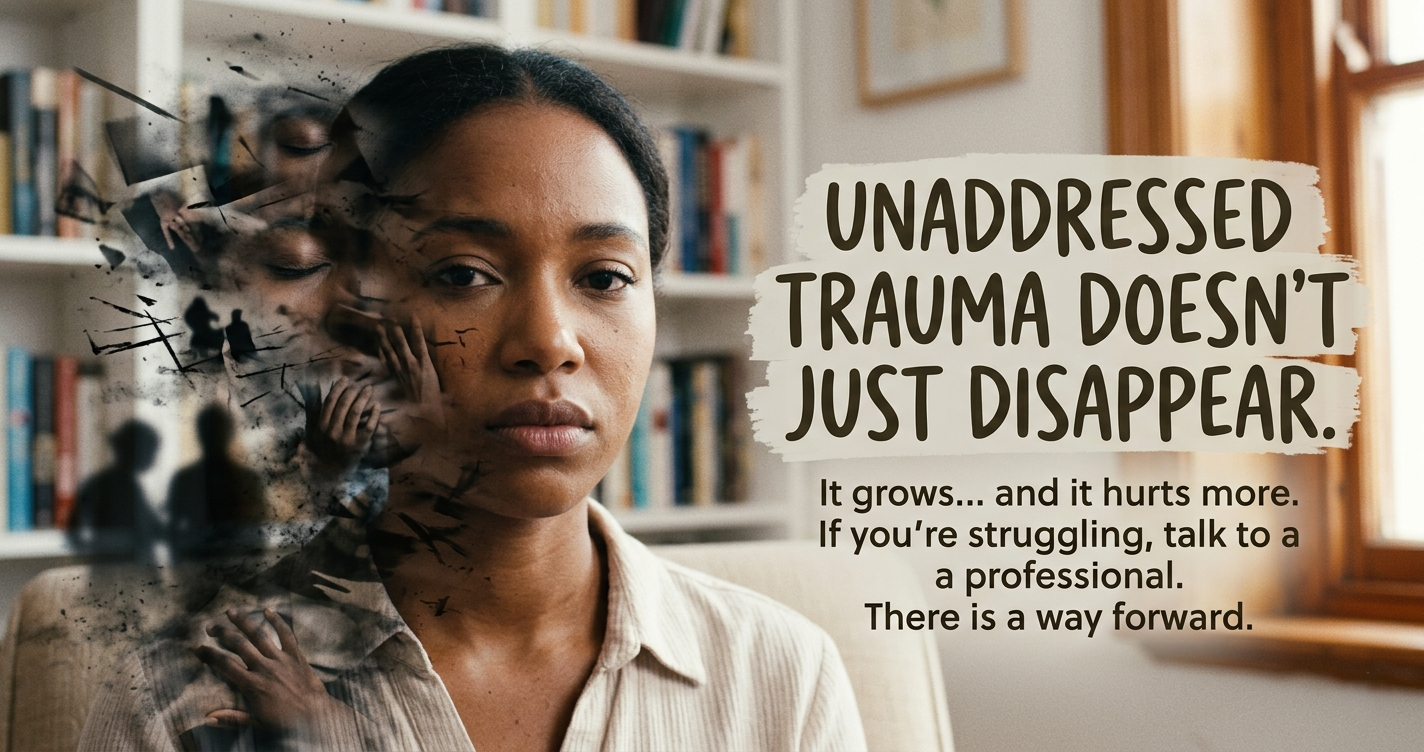
But trauma doesn’t work like a physical cut. It doesn’t just scab over and disappear if you ignore it.
In fact, untreated trauma behaves a lot like a physical infection. If left unaddressed, it festers, spreads, and begins to impact parts of your life you never thought it could touch.
If you’ve been telling yourself, “It wasn’t that bad,” or “I can handle this on my own,” here is a look at how unaddressed trauma can worsen over time, and why speaking to a professional isn’t a sign of weakness, but the only real way out.
1. The Traumatic Memory Doesn’t Get Filed Away Correctly
When you experience a normal, everyday event, your brain processes it and files it away into long-term memory. You remember it happened, but you don’t relive it.
Trauma alters the brain’s filing system. Because the event was so overwhelming, the brain’s emotional center (the amygdala) stays on high alert, and the memory gets trapped in the “present-day” folder.
When you don’t talk to a professional to help reprocess that memory, your brain continues to treat the past trauma as an active, ongoing threat. This is why a simple sound, smell, or word can trigger a massive emotional reaction years later. Your brain literally thinks it is happening all over again.
2. Your Nervous System Suffers from “System Burnout”
Trauma keeps your body stuck in a state of hypervigilance, a constant, low-grade “fight, flight, or freeze” mode.
When you don’t seek help to reset your nervous system, staying on high alert takes a massive physical toll. Over time, unaddressed trauma frequently manifests as physical symptoms:
- Chronic fatigue and exhaustion
- Unexplained muscle tension and chronic pain
- Severe insomnia or recurring nightmares
- Gastrointestinal issues (the gut and brain are deeply connected)
What started as an emotional or psychological wound eventually turns into a physical health crisis.
3. It Disrupts Your Relationships Through “Emotional Bleeding”
You might think you are successfully keeping your trauma hidden from the rest of the world, but unaddressed trauma has a way of bleeding into your current relationships.
Without professional guidance to understand your triggers, you may find yourself:
- Pushing people away: Pushing away loved ones out of a subconscious fear of being hurt or abandoned again.
- Overreacting to minor conflicts: Interpreting a partner’s quiet mood or a friend’s late text as proof that they dislike you.
- Choosing unhealthy dynamics: Unconsciously repeating familiar, toxic patterns because your brain mistakes “chaos” for “normalcy.”
4. The Coping Mechanisms Become Toxic
When the internal pain of trauma gets too loud and you don’t have professional tools to manage it, your brain will search for any temporary relief it can find.
Without therapy, people often turn to maladaptive (unhealthy) coping mechanisms to numb the pain:
- Substance abuse (drugs or alcohol)
- Workaholism or extreme perfectionism
- Disordered eating patterns
- Compulsive scrolling, gaming, or isolation
While these might offer a few hours of numbness, they ultimately create a secondary layer of problems, digging a deeper hole that makes recovery feel even more distant.
The Concept of “Delayed Expression”
Many people wonder, “Why am I falling apart now, when the trauma happened years ago?” Mental health professionals call this delayed expression. When you are actively going through a crisis, your brain goes into survival mode. It is only years later, when you are finally safe and stable, that your brain decides it’s time to process the pain. Falling apart years later isn’t a sign of regression; it’s your mind finally crying out for help.
Breaking the Silence: What Therapy Actually Does
Seeing a professional isn’t about sitting on a couch and crying while someone takes notes. It is a structured, collaborative process designed to give you your life back. A trauma-informed therapist helps you:
- De-escalate your nervous system: Learning how to feel safe in your own body again.
- Reprocess the past: Moving the memory from the “active threat” folder to the “past history” folder through evidence-based modalities like EMDR (Eye Movement Desensitization and Reprocessing) or Cognitive Behavioral Therapy (CBT).
- Reclaim your identity: Figuring out who you are outside of the context of what happened to you.
You Don’t Have to Carry It Alone
The most dangerous lie trauma tells you is that you are completely isolated, that your story is too messy, or that you should be “over it by now.”
Reaching out to a professional isn’t admitting defeat. It is an act of fierce self-preservation. You survived the event; now, let a professional help you survive the aftermath so you can finally start to truly live.
Leave a Reply