Dehydration & Your Mood: Why Drinking Water is the Most Underrated Form of Self-Care
We talk a lot about self-care in the mental health space. We talk about therapy, boundary-setting, meditation, and bubble baths. But we often skip over the absolute baseline of biological self-care: hydration.
When you’re stuck in a mental health rut, whether it’s the heavy fog of depression or the rapid-fire racing of anxiety, your basic physical needs usually take a backseat. Drinking water feels like a chore.
But here’s the truth: Your brain cannot fight for your mental well-being if it is literally shrinking from a lack of water.
Let’s dive into why hydration is a crucial, non-negotiable tool for your mental health toolkit, and how you can make it easier to manage when you’re struggling.
The Biological Link Between Water and Your Brain
It sounds overly simplistic, doesn’t it? “Just drink water, and you’ll feel better.” But from a neurological standpoint, it’s not a cliché, it’s science.
Your brain is made up of about 75% water. When that level drops, your brain function drops with it. Here is what happens under the surface:
- Spikes in Cortisol (The Stress Hormone): Dehydration is a physical stressor. When your body notices a shortage of water, it goes into a mild “survival mode,” releasing cortisol. If you are already prone to anxiety, this hormonal spike can trigger or worsen feelings of panic and dread.
- Serotonin Production Slows Down: Serotonin, the neurotransmitter responsible for stabilizing your mood and feelings of happiness, relies heavily on water. Dehydration limits your brain’s ability to produce it, which can actively deepen depressive states.
- Energy Depletion: Low water levels mean less blood flow and oxygen to the brain, leading to that heavy, sluggish fatigue that makes even getting out of bed feel like a mountain to climb.
The Mental Health Mimic: Dehydration doesn’t just worsen mental health issues; it can actually mimic them. Panic attacks and dehydration share identical symptoms: increased heart rate, headaches, dizziness, and muscle weakness. Sometimes, what feels like a sudden wave of anxiety is actually just your body begging for a glass of water.
Hydration as a Radical Act of Self-Care
When executive dysfunction kicks in, self-care routines that require multiple steps (like cooking a healthy meal or doing a 10-step skincare routine) feel impossible.
Hydration is a low-barrier entry point to taking care of yourself. It requires very little energy, but the payoff is immediate.
[ Drink Water ] ➔ [ Lower Cortisol ] ➔ [ Clearer Thinking ] ➔ [ Better Emotional Regulation ]
By prioritizing a glass of water, you are telling yourself: “I am experiencing a hard time right now, but I still deserve to have my basic biological needs met.” It’s a small, quiet way to practice self-compassion when everything else feels too loud.
4 Low-Energy Ways to Stay Hydrated When You’re Struggling
When you’re dealing with mental health challenges, “remembering to drink eight glasses of water” is easier said than done. Here are some realistic, shame-free strategies to get your fluid intake up:
1. The “Two-Sip” Rule
Don’t worry about chugging a whole bottle. If a full glass feels overwhelming, just look at your water and commit to taking two sips. More often than not, once you start, your body will realize it’s thirsty and you’ll drink more. But if you only take two sips? That is still a win.
2. Keep Water Within Arm’s Reach
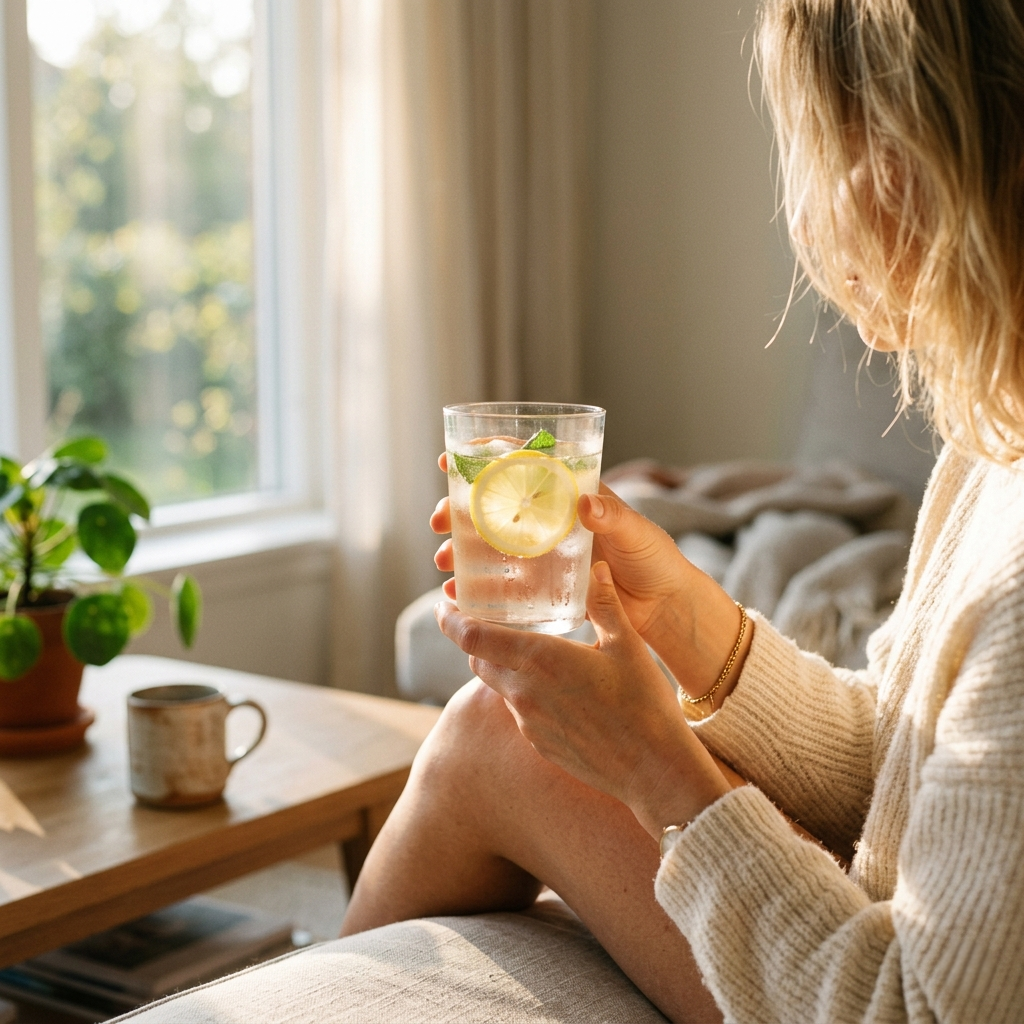
If you have to get up, walk to the kitchen, and wash a glass just to get a drink, you probably won’t do it on a bad day. Remove the friction. Keep a water bottle on your nightstand, next to your couch, or at your desk.
3. Eat Your Hydration
If drinking water feels incredibly boring or unappealing, try to eat foods with high water content. Soups, watermelon, cucumbers, strawberries, and oranges all count toward your daily hydration goals and are gentle on a sensitive stomach.
4. Game-ify It or Use an App
If you love structure, use a free app like Plant Nanny (where drinking water keeps a cute virtual plant alive) or buy a timed water bottle that cheers you on throughout the day.
Be Gentle With Yourself
If you are reading this and realizing you haven’t had a sip of water all day, there is no shame here. Mental health struggles are exhausting, and you are doing the best you can with the energy you have.
But consider this your gentle, loving reminder from the internet: Pause right now, go grab a glass of water, and take just two sips. Your brain will thank you for it.
What about you? Do you notice a shift in your anxiety or mood when you’re dehydrated? What’s your favorite way to trick yourself into drinking more water? Let’s chat in the comments below!
Leave a Reply