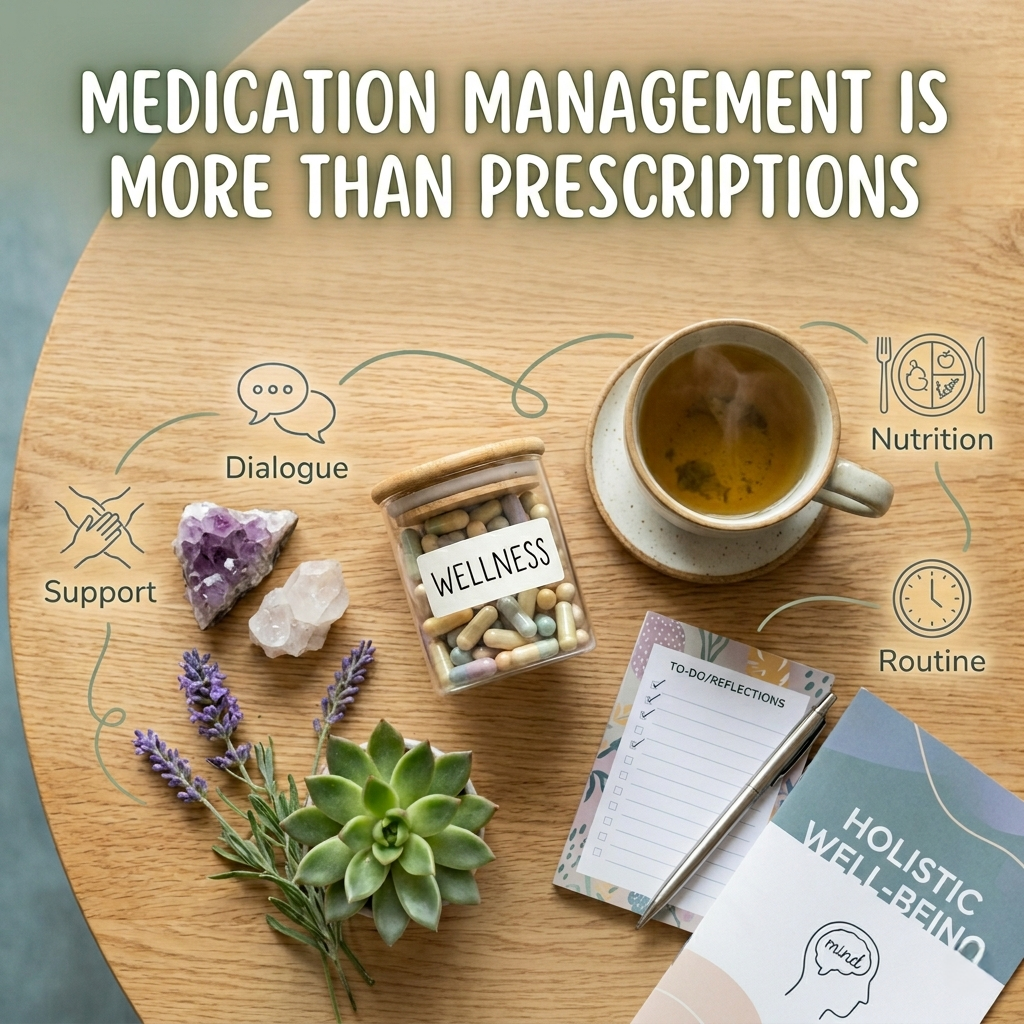
Medication Management Is More Than Prescriptions: A Holistic Approach
When we think of medication management, it is easy to visualize a simple transaction: a doctor writes a script, a pharmacy fills it, and a patient takes the pill. However, for those navigating mental wellness, this process is just the tip of the iceberg.
True medication management is an ongoing, collaborative journey, a holistic partnership that centers on your overall quality of life, not just symptom suppression.
It’s a Dialogue, Not a Directive
Medication is a tool in your wellness kit, but it works best when it is adjusted based on your lived experience. Your feedback is the most critical data point your provider has.
- Beyond the Symptoms: Are you feeling “numb” instead of stable? Is a side effect making it harder to engage in the activities you love? These details matter just as much as the primary symptoms you are managing.
- The Importance of Consistency: Taking medication as prescribed is essential, but it is equally important to communicate honestly if that consistency is being disrupted by daily life stressors or logistical challenges.
- Adjustments are Normal: Rarely is a treatment plan “set it and forget it.” Your brain and body change, as do your circumstances. A collaborative approach means your medication regimen evolves with you, not at you.
Integrating Self-Care as the Foundation
Think of your medication as the scaffolding that supports your growth, but your lifestyle habits are the structure itself. The most effective treatment plans are those that integrate medication with supportive self-care strategies.
- Routine and Regulation: Consistent sleep, movement, and nutrition create a stable baseline that helps your body process medication more predictably.
- Mindfulness and Awareness: Practicing mindfulness allows you to better tune into your internal state. This increased self-awareness helps you identify nuanced changes in how you feel, making you a more effective advocate for your own health during follow-up appointments.
- Emotional Support: Medication can help quiet the noise of anxiety or lift the weight of depression, which then creates the necessary “headspace” to engage in therapy or other emotional support practices.
You Are the Expert on Your Experience
At the heart of this process is you. You are the only person who experiences 24/7 access to your own thoughts, emotions, and physical sensations.
When you approach medication management as an active partner, rather than a passive recipient, you regain a sense of agency. By tracking your progress, noting subtle shifts, and staying open with your care team, you transform a clinical necessity into a proactive step toward your overall wellness.
Leave a Reply