The Generational Shift: Redefining Mental Wellness Across Eras
Mental health has always been a part of the human experience, but the language we use to describe it has changed radically over the decades. If you’ve ever tried to explain “burnout” to a parent only to be met with advice to “just stay busy,” you’ve experienced the generational wellness gap firsthand.
Understanding these differences isn’t about deciding who is “right”. It’s about bridging the gap between how our parents survived and how we choose to thrive.
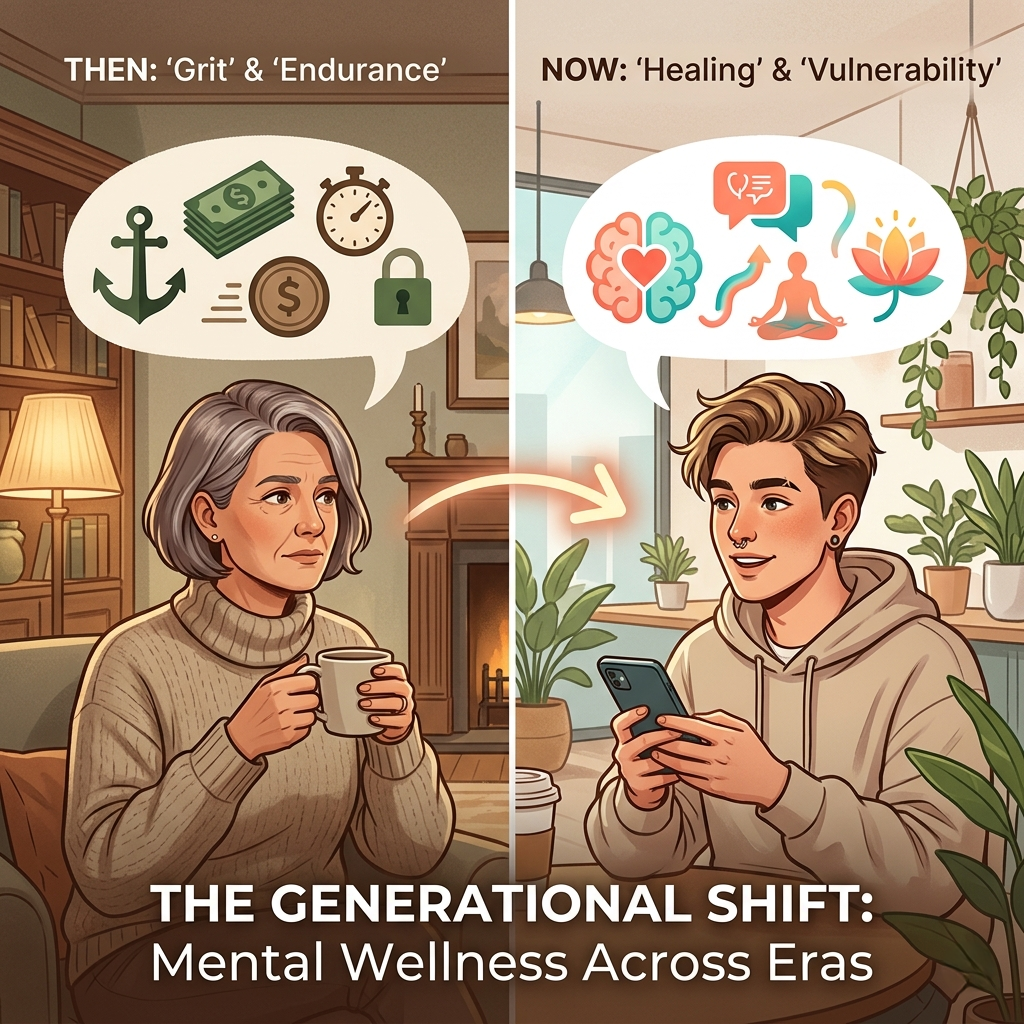
1. The Legacy of “Grit” vs. The Language of “Healing”
For many in the Baby Boomer or Gen X categories, mental health was often viewed through the lens of productivity and resilience. Wellness wasn’t a conversation; it was a byproduct of hard work and stability.
- The Parent Perspective: Mental struggles were often internalized or kept behind closed doors to maintain social or professional standing.
- The Modern Perspective: Millennials and Gen Z view mental health as a core pillar of identity. We prioritize emotional intelligence and believe that naming a struggle is the first step toward solving it.
2. Community Secrets vs. Digital Vulnerability
The rise of the internet has completely shifted the boundaries of privacy.
- Then: Seeking therapy was often seen as a “last resort” or something reserved for extreme crises.
- Now: Sharing therapy breakthroughs or mental health journeys on social media has helped de-stigmatize professional help. We see wellness as a proactive practice, like going to the gym, rather than a reactive one.
3. Survival Mode vs. The Foundational Three
Our parents’ generation often operated in “survival mode”, focusing on providing, saving, and enduring. While effective for building stability, it often left little room for the Foundational Three of modern wellness:
- Sleep Hygiene: Moving beyond “I’ll sleep when I’m dead” to understanding restorative rest.
- Mindful Nutrition: Seeing food as fuel for the brain, not just the body.
- Intentional Movement: Shifting from “exercise as a chore” to “movement for mental clarity.”
Bridging the Gap
The goal of understanding these differences is empathy. Our parents often used silence as a protective shield, while we use transparency as a tool for liberation. By acknowledging that both generations are simply trying to navigate a complex world, we can start more supportive conversations at the dinner table.
Reflective Thought: Next time you talk to a family member about wellness, try focusing on shared goals, like peace of mind or physical energy, rather than using clinical labels that might feel unfamiliar to them.
Leave a Reply