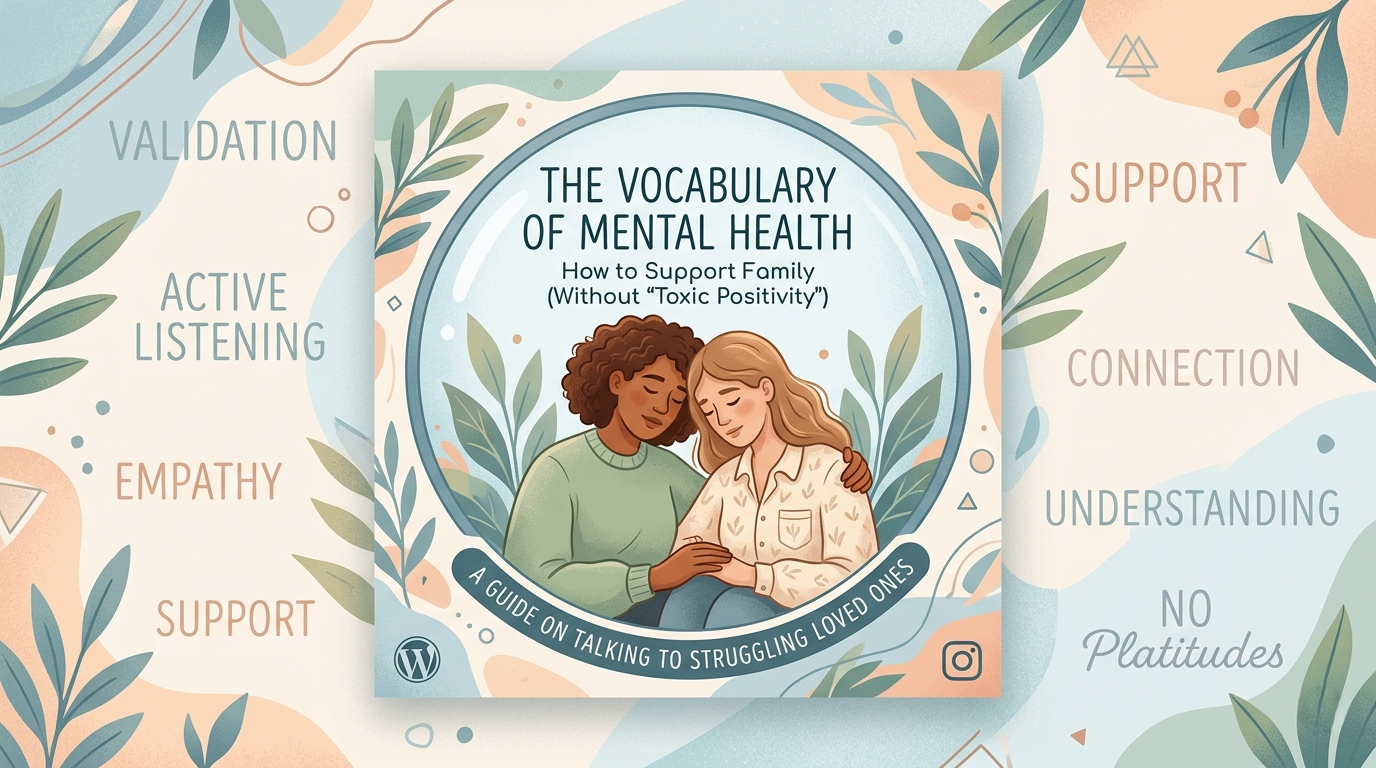
The Vocabulary of Mental Health: How to Support Family (Without “Toxic Positivity”)
Watching someone you love struggle with their mental health is incredibly difficult. You want to help, you want to fix it, and naturally, you want them to feel better. But often, the words we think are helpful can actually be counterproductive, creating a sense of isolation or even shame for the person who is hurting.
This isn’t about blaming anyone. Most people who use phrases associated with “toxic positivity” have the best intentions. They are coming from a place of love and a genuine desire to uplift. However, understanding the nuance of why certain phrases fall short is crucial to building stronger connections and offering truly supportive communication.
What is “Toxic Positivity”?
At its core, “toxic positivity” isn’t about being optimistic. It’s the overgeneralization of a happy, optimistic state regardless of the actual situation. It’s the belief that no matter how painful or difficult a situation is, we should maintain a positive mindset.
The danger lies in that it invalidates and dismisses genuine human suffering. When someone is struggling, they aren’t looking for a silver lining right away. They’re often looking to be seen, heard, and understood. Pushing positivity too soon can feel like their pain is being minimised, or that they are being told their feelings are wrong or unhelpful.
Why Phrases Like “Just Stay Positive” Don’t Help
Let’s break down some common examples:
1. “Just stay positive.”
- Why it feels dismissive: This implies that mental health challenges are simply a matter of choice or willpower. For someone experiencing depression, anxiety, or trauma, “staying positive” isn’t something they can simply turn on. It feels dismissive of the intense, often chemical, reality of their experience.
- What to say instead: “I’m so sorry you’re going through this.” (Simple, validating, and powerful.)
2. “Everything happens for a reason.”
- Why it’s unhelpful: While meant to be comforting, this can feel like an attempt to find immediate meaning or purpose in pain that feels meaningless. It can also, intentionally or not, sound like you’re justifying their suffering.
- What to say instead: “I don’t even know what to say, but I’m here for you.” (Honest vulnerability is often more comforting than platitudes.)
3. “You have so much to be grateful for.”
- Why it can cause shame: While gratitude is a powerful tool, pointing it out when someone is actively struggling can induce a profound sense of guilt. The person knows they have good things, but their mental state is preventing them from feeling it. This phrase reinforces that their internal experience is wrong.
- What to say instead: “I can’t imagine how heavy this must feel.” (Shows empathy and acknowledges the weight of their experience.)
So, How Do We Talk About Mental Health with Loved Ones?
Instead of looking for the “right” solution or trying to “fix” their problems, focus on building a bridge of connection. The goal is validation and connection, not correction.
1. Validate Their Experience (Without Judgment)
The single most powerful tool you have is validation. You don’t have to agree with their perspective, and you certainly don’t have to fully understand what they are feeling. You just have to acknowledge that what they are feeling is real to them.
- “It sounds like you’re going through a lot right now.”
- “That sounds incredibly difficult.”
- “I appreciate you sharing this with me.”
2. Practice Active Listening
Active listening means listening to understand, not to respond. Resist the urge to interrupt with your own stories, offer unsolicited advice, or explain why they shouldn’t feel the way they do.
- Give them your full attention.
- Use phrases that show you’re engaged, like “Can you tell me more about that?” or “What does that feel like for you?”
- Be comfortable with silence. Sometimes, people just need space to formulate their thoughts.
3. Shift from Solvers to Supporters
You are not their therapist, and you can’t cure them. Your role is that of a loving, supportive presence. This shift in mindset releases you from the pressure to have all the answers and allows you to focus on simply being there.
- Ask: “How can I best support you right now?” (This allows them to define their needs.)
- Offer specific, tangible help: “I’m going to the grocery store. What can I pick up for you?” or “Can I come over and watch a movie with you – no talking required?”
4. Ask Consent Before Offering Advice
If you genuinely feel you have a perspective or resource that could help, always ask for permission first. This shows respect for their autonomy and ensures they are receptive to hearing it.
- “I have a thought about that, would it be helpful if I shared it?”
- “Are you looking for solutions right now, or do you just need someone to listen?”
Conclusion: It’s About Showing Up
There’s no magic script for navigating mental health conversations with family. It requires practice, patience, and a willingness to get it wrong sometimes. The most important thing is your presence and your genuine desire to connect. By moving away from the simplistic, often isolating language of toxic positivity and embracing the messy, vulnerable vocabulary of empathy, you create a safe space for your loved ones to be seen and supported, and that is where true connection begins.
Leave a Reply