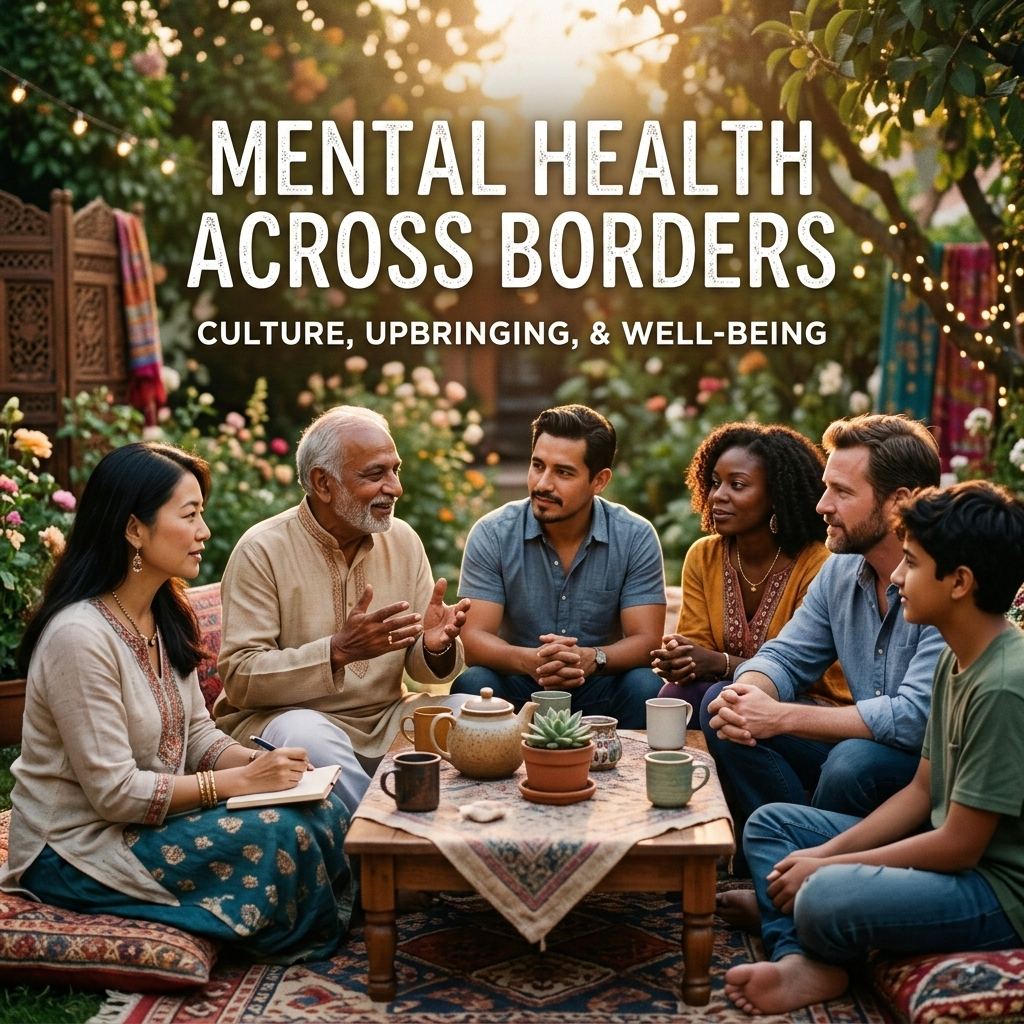
Mental Health Across Borders: How Culture and Upbringing Shape Our Views on Therapy and Self-Care
Mental health is not a monolith. While biological factors are a fundamental part of the puzzle, our cultural background and upbringing profoundly influence how we perceive, understand, and address mental well-being. This blog post explores this fascinating intersection, highlighting how our origins color our approach to therapy and self-care.
Understanding the Cultural Lens
Our culture isn’t just about food, traditions, and language; it’s the lens through which we interpret the world, including our emotions and thoughts. These ingrained belief systems, often absorbed from a young age, shape our view of:
- What constitutes mental illness: Different cultures define and manifest mental distress in various ways. While one culture might prioritize individual unhappiness, another might emphasize somatic (bodily) symptoms or social disharmony as indicators of a problem.
- The stigma surrounding mental health: In some cultures, mental illness is deeply stigmatized, viewed as a source of shame for the individual and their family. This can lead to concealment, self-blame, and reluctance to seek help. In contrast, other cultures may embrace more open discussions and normalized support systems.
- The role of community and individualism: Our upbringing shapes our orientation towards the self and the group. Individualistic cultures often prioritize personal autonomy and internal solutions, while collectivistic cultures place greater emphasis on family, social networks, and community interdependence.
Nurturing a Healthy Mind: Upbringing’s Impact
Our upbringing, closely intertwined with our cultural background, plays a vital role in shaping our mental health journey. The messages we receive about:
- Emotions: Were we encouraged to express our feelings openly, or were we taught to suppress them? Our relationship with our emotions significantly affects our ability to process and manage distress.
- Resilience: What messages were we given about coping with adversity? Some upbringings might emphasize self-reliance, while others might prioritize seeking social support.
- Vulnerability: Was vulnerability framed as a weakness or a strength? Our willingness to admit we’re struggling and ask for help often hinges on this early programming.
Culturally Conscious Mental Health
Recognizing the powerful influence of culture is essential for both individuals and mental health professionals. Understanding these nuances allows for:
- More effective and empathetic communication: Therapists who are culturally sensitive can better understand their clients’ perspectives and tailor their approaches to their unique cultural contexts.
- Reduced stigma: Open dialogue about cultural influences on mental health can help destigmatize mental health challenges within communities and encourage individuals to seek support.
- Culturally tailored self-care practices: Self-care isn’t a one-size-fits-all approach. Culturally tailored self-care can incorporate traditional practices, beliefs, and values that are meaningful to the individual.
Embracing Diversity in Mental Health
Mental health is a rich and diverse tapestry, woven from countless individual threads of cultural heritage and unique upbringing. By embracing this diversity and cultivating a deep understanding of how culture shapes our mental health journeys, we can create a more inclusive, supportive, and effective mental healthcare landscape for all.
Leave a Reply