
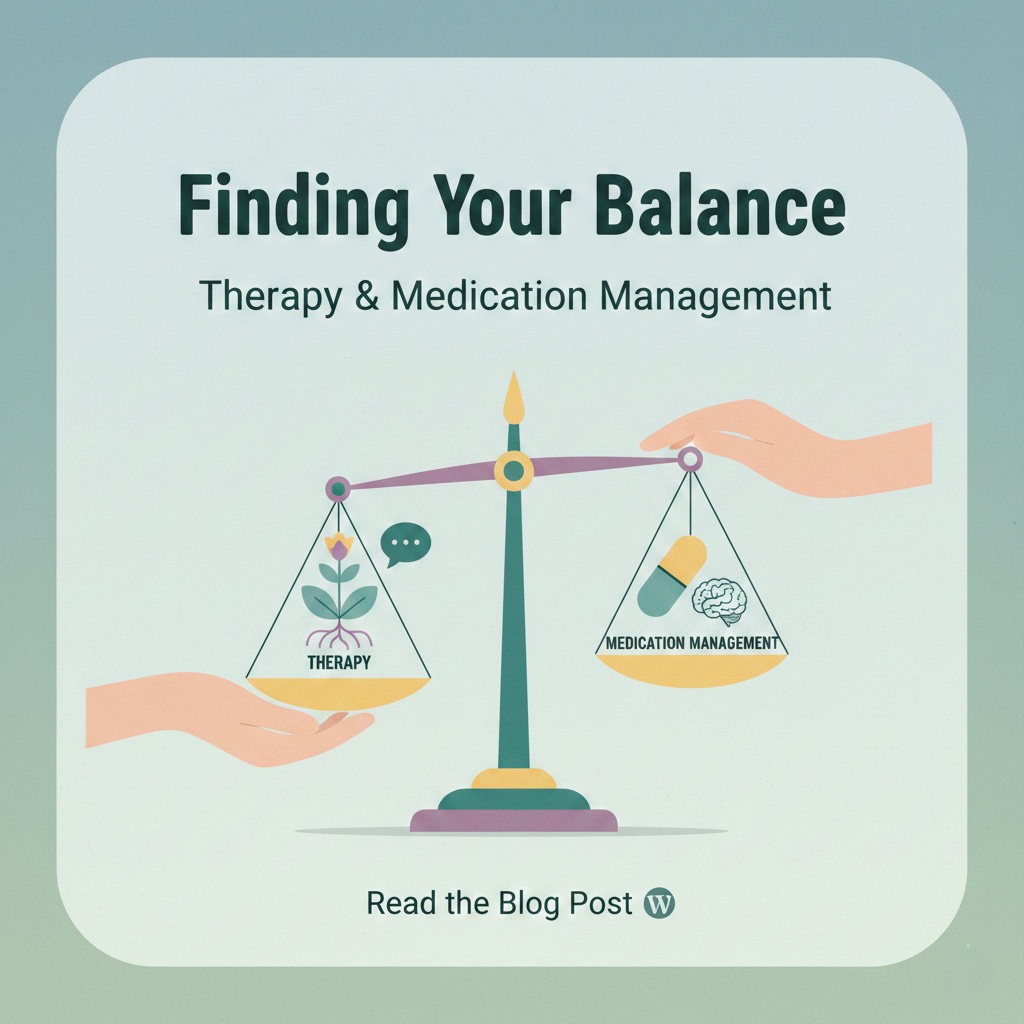
Finding Your Balance: A Guide to Therapy and Medication Management
Taking the first step toward mental wellness can feel like navigating a maze without a map. You know you want to feel better, but the path, whether it involves talking it out, balancing brain chemistry, or both, isn’t always clear.
The truth? Mental health isn’t “one size fits all.” For many, the most effective “map” is a combination of therapy and medication management. Here’s how these two powerhouses work together to help you reclaim your life.
Understanding the Duo: Therapy vs. Medication
Think of your mental health like a broken leg. Medication is the cast that stabilizes the bone so it can heal, while therapy is the physical therapy that teaches you how to walk again and strengthen your muscles.
| Feature | Therapy (The “Work”) | Medication Management (The “Support”) |
| Primary Goal | Developing coping skills and processing emotions. | Stabilizing neurochemicals to reduce symptoms. |
| Provider | Psychologist, LCSW, or Counselor. | Psychiatrist, Nurse Practitioner, or MD. |
| Focus | Behavioral patterns, trauma, and lifestyle. | Biological symptoms (sleep, mood, energy). |
| Timeline | Can be short-term or a lifelong practice. | Adjusted over time based on efficacy and side effects. |
Why “Both” is Often Better Than “Either”
While some people find success with just one approach, research frequently shows that a combined approach yields the best long-term results, especially for conditions like depression and anxiety.
- Medication clears the fog: When you’re in a deep crisis or struggling with severe chemical imbalances, it’s hard to “talk” your way out of it. Medication can lower the volume on your symptoms so you actually have the energy to engage in therapy.
- Therapy builds the toolkit: Medication can help you feel better, but it doesn’t teach you how to handle a toxic boss or process childhood grief. Therapy provides the strategies you need for when life gets messy.
What to Expect in Medication Management
If you’ve never seen a prescriber before, “Med Management” might sound intimidating. It’s actually a very collaborative process:
- The Assessment: A provider reviews your history, symptoms, and any physical health issues.
- The Prescription: You’ll start a regimen tailored to your needs.
- The Follow-up: This is the “management” part. You’ll meet regularly (usually every 4–8 weeks) to discuss how the medication is working and adjust dosages if necessary.
A Note on Patience: Most psychiatric medications take 4 to 6 weeks to reach full effectiveness. It’s a marathon, not a sprint!
Overcoming the Stigma
There is zero shame in needing a little extra help. Needing medication doesn’t mean you’re “weak,” and going to therapy doesn’t mean you’re “broken.” It means you are taking charge of your health with every tool available to you.
Your Next Steps
If you’re feeling overwhelmed, start small. Reach out to a primary care doctor or a local clinic to ask for a referral. You deserve to feel like yourself again.
Leave a Reply