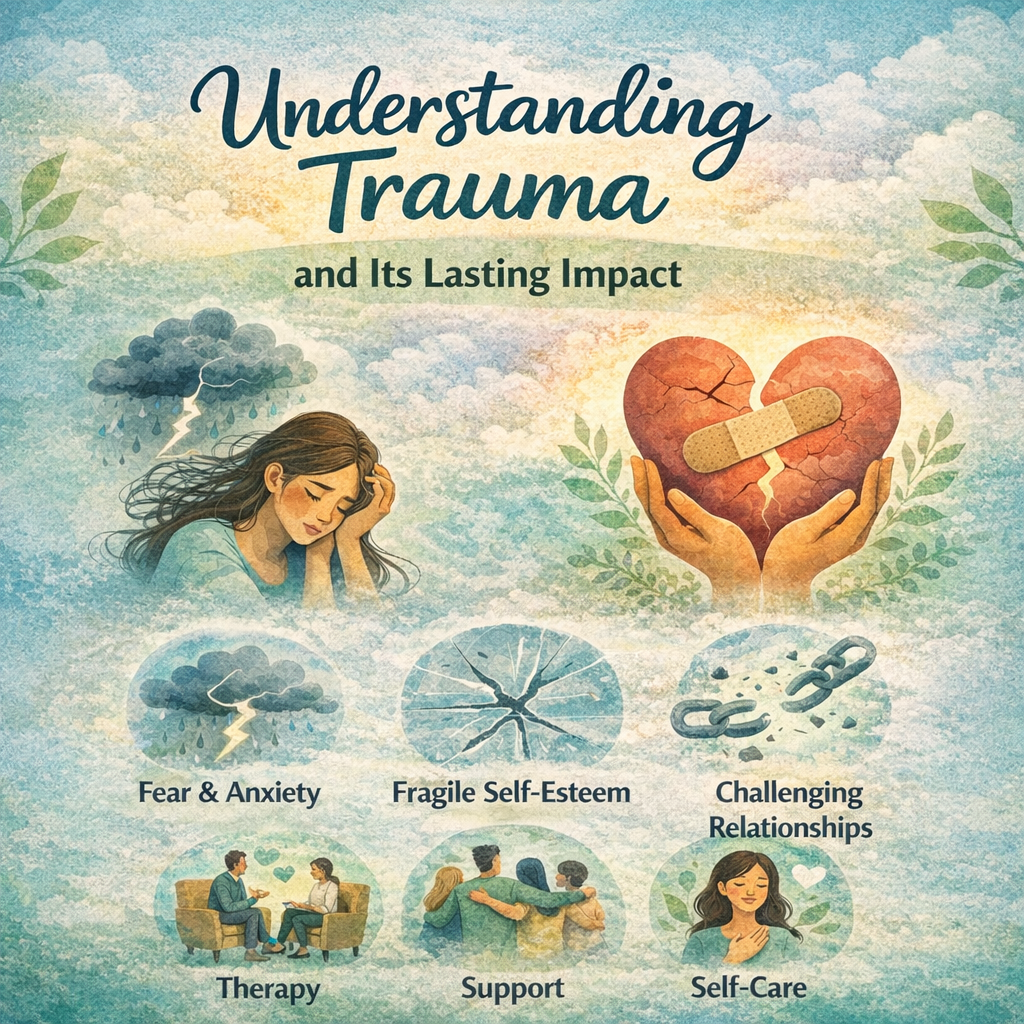
The Invisible Weight: Understanding Trauma and Its Lasting Impact
We often think of trauma as a single, catastrophic event, something that happens once and then ends. But for many, trauma isn’t just a memory; it’s a physical and emotional architecture that changes how they interact with the world.
Whether it stems from a specific incident or prolonged exposure to stress (often called Complex Trauma), the impact vibrates through our nervous systems, our relationships, and our sense of self. Understanding how trauma works is the first step toward reclaiming your narrative.
1. Trauma is a Body Experience, Not Just a Mind One
Many people are surprised to find that trauma manifests as physical symptoms. As Dr. Bessel van der Kolk famously wrote, “The body keeps the score.” When we experience a traumatic event, our “fight-flight-freeze” response can become “stuck” in the ON position.
Common physical signs of stored trauma include:
- Hypervigilance: Always being on edge or “waiting for the other shoe to drop.”
- Unexplained Fatigue: The exhaustion of a nervous system that never rests.
- Digestive Issues: The strong link between the gut and the brain means stress often settles in the stomach.
- Sleep Disturbances: Insomnia or vivid, distressing dreams.
2. The “Window of Tolerance”
Trauma often narrows what psychologists call our Window of Tolerance. This is the emotional zone where we can handle the ups and downs of life effectively.
- Hyper-arousal: When pushed out the top of the window, you may feel anxious, angry, or overwhelmed.
- Hypo-arousal: When pushed out the bottom, you may feel numb, depressed, or “checked out” (dissociation).
Key Takeaway: Healing involves slowly widening that window so you can feel safe experiencing your emotions again.
3. Impact on Relationships and Connection
Trauma can change the way we view “safety” in others. It might lead to:
- Avoidance: Shunning intimacy to prevent potential hurt.
- People Pleasing: Using “fawning” as a survival tactic to keep others happy and minimize conflict.
- Difficulty with Boundaries: Finding it hard to say no or, conversely, pushing everyone away.
Moving Toward Healing
The most important thing to know about trauma is that it is not a life sentence. The brain possesses remarkable neuroplasticity, the ability to reorganize and form new neural connections.
Ways to Begin the Journey:
- Psychoeducation & Awareness:
Learning how trauma affects the brain and nervous system can be empowering. Understanding that symptoms like hypervigilance, emotional numbness, or avoidance are common trauma responses helps reduce shame and fosters self-understanding. - Grounding Techniques:
Simple practices like the 5-4-3-2-1 technique can help pull you out of a flashback and gently bring you back into the present moment. - Self-Compassion:
Acknowledge that your reactions were once survival mechanisms. They weren’t “wrong”; they were your brain’s way of keeping you alive.
Support
If you are struggling, you don’t have to carry this weight alone.
- Authentic Mental Wellness, LLC: Call +1 (240)829-1863
- Find a Therapist: https://www.psychologytoday.com/us/psychiatrists/francine-kamhoua-gaithersburg-md/1146505
Leave a Reply